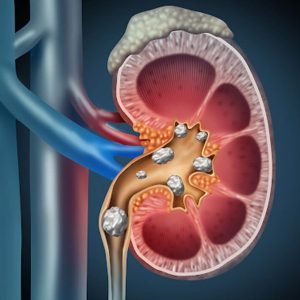
What is a Renal Stone?​

kidney stone
  1. The main reasons for kidney stones in children includes dehydration, which leads to concentrated urine and crystal formation.
  2. Dietary habits, such as high intake of salt, oxalates, and animal protein.
  3. Genetic predispositions to metabolic disorders like hypercalciuria (excess calcium in urine) and hyperoxaluria (excess oxalates).
  4. Medical conditions like urinary tract infections (UTIs), obesity, or gastrointestinal diseases that affect nutrient absorption.
  5. Additionally, children with conditions such as cystic fibrosis or those who take medications that alter urine chemistry may be at a higher risk.
  1. Children may experience intense pain in their stomach, back, or side, which may come like waves. This pain is typically associated with the stone moving or blocking the urinary tract.
  2. Other symptoms like blood in the urine (Haematuria), frequent urination, painful urination, nausea, vomiting, fever (if infection is present), and irritability.
  3. In infants, it might be harder to diagnosis without testing, but changes in behavior or crying during urination can be clues.

1) Calcium oxalate stones, the most common type, it is linked to dehydration and a diet high in oxalates (found in spinach, nuts, and chocolate).

2) Uric acid stones, which may occur in children with high uric acid levels due to metabolic conditions like gout or dehydration.

3) Struvite stones, often related to chronic UTIs caused by bacteria that produce ammonia.

4) Cystine stones, a rare type associated with cystinuria, a genetic disorder that causes high levels of cystine in the urine.

  1. Doctors normally incept thorough medical history and physical examination.
  2. Urine and blood tests are done to detect abnormalities in electrolytes, calcium, and oxalates.
  3. Imaging techniques like ultrasound or X-rays are commonly used to locate the stone’s size and position.
  4. CT scans used in some cases for more detailed analysis.
  1. For small stones, traditional management like increased hydration and pain relief may be sufficient.
  2. If the stone is too large or causing hindrance, then more advanced procedures are followed like Extracorporeal Shock Wave Lithotripsy (ESWL), which uses sound waves to break the stone into smaller pieces that can be passed out more easily, or surgical removal (such as ureteroscopy or percutaneous nephrolithotomy) if the stone is resistant to non-invasive measures.
  3. For recurring stones, doctors may prescribe medications to alter urine chemistry, reduce calcium or oxalate levels, or address metabolic disorders.
  1. Adequate hydration
  2. Balanced diet low in salt and oxalates
  3. Monitoring calcium intake (while avoiding excess).
  4. Regular follow-up visits with doctor
error: Content is protected !!

Dr. Manisha Singhatiya

MBBS, DNB Pediatrics

Dr. Manisha Singhatiya – Pediatrician

Dr. Manisha Singhatiya is a dedicated and compassionate pediatrician with a strong academic foundation and hands-on clinical experience in child healthcare. She holds an MBBS from Dr. S.N. Medical College, Jodhpur, and is pursuing/has completed her DNB in Pediatrics from GMERS Medical College, Vadodara.

With a keen focus on delivering high-quality pediatric care, Dr. Manisha is trained in managing pediatric emergencies, neonatal care, and child nutrition. She is skilled in vaccination practices, resuscitation techniques, and providing empathetic communication to ensure both children and parents receive holistic care.

She is certified in Basic Life Support (BLS), Pediatric Advanced Life Support (PALS), and Advanced Neonatal Resuscitation Program (NRP), equipping her to handle critical pediatric and neonatal situations effectively.

Dr. Manisha actively participates in academic development through conferences and workshops, including national-level pediatric and nephrology symposiums. She has also contributed to medical research, with a published paper focusing on homocysteine levels in pediatric nutritional anemia.

Core Strengths:

  • Neonatal & pediatric resuscitation
  • Pediatric emergency management
  • Child nutrition & vaccination
  • Strong clinical and academic orientation
  • Compassionate patient care and communication

Career Focus:
Dr. Manisha aims to contribute to clinical excellence in pediatrics while continuously advancing her knowledge through research and professional development.

Dr Manisha (2)

Dr. Anujna

(MBBS, MD Pediatrics), PDF (PCCM)

Dr. Anujna – Pediatrician & Pediatric Critical Care Specialist

Dr. Anujna is a highly qualified and dedicated pediatrician with specialized expertise in pediatric critical care medicine. She holds an MBBS and MD in Pediatrics, followed by a DNB and a prestigious Post-Doctoral Fellowship in Pediatric Critical Care Medicine from AIIMS Jodhpur.

With strong clinical experience across reputed institutions, including Indira Gandhi Institute of Child Health (Bangalore), Cloudnine Hospitals, and AIIMS Jodhpur, she has worked in roles ranging from Pediatric Resident to Senior Resident. Her hands-on experience spans general pediatrics, neonatal care (NICU), and pediatric intensive care (PICU).

Dr. Anujna is skilled in managing pediatric emergencies, diagnosing and treating common childhood illnesses, and providing comprehensive care for newborns and children. Her expertise also includes growth and development monitoring, vaccination guidance, breastfeeding counseling, and nutritional support.

She is proficient in a wide range of advanced pediatric and neonatal procedures, including intubation, central line placement, ventilation, dialysis, and critical care interventions.

Academically, she has demonstrated excellence by securing first-class MBBS results and ranking 7th in her MD program. She has actively contributed to research and presented at national conferences, with work focusing on critical pediatric conditions and rare diseases.

A life member of the Indian Academy of Pediatrics, Dr. Anujna is certified in Pediatric Advanced Life Support (PALS) and Neonatal Resuscitation (NRP).

Core Strengths:

  • Pediatric & neonatal intensive care
  • Emergency management
  • Child growth, nutrition & vaccination
  • Advanced procedural skills
  • Patient-centered care and parental counseling

Career Focus:
Dr. Anujna aims to further advance her expertise as a pediatric intensivist while contributing to medical education and improving standards of pediatric and newborn care.

DR. ANUJNA (2)